

Enrico Gloria
Download PDF
Sep 14 2025
0
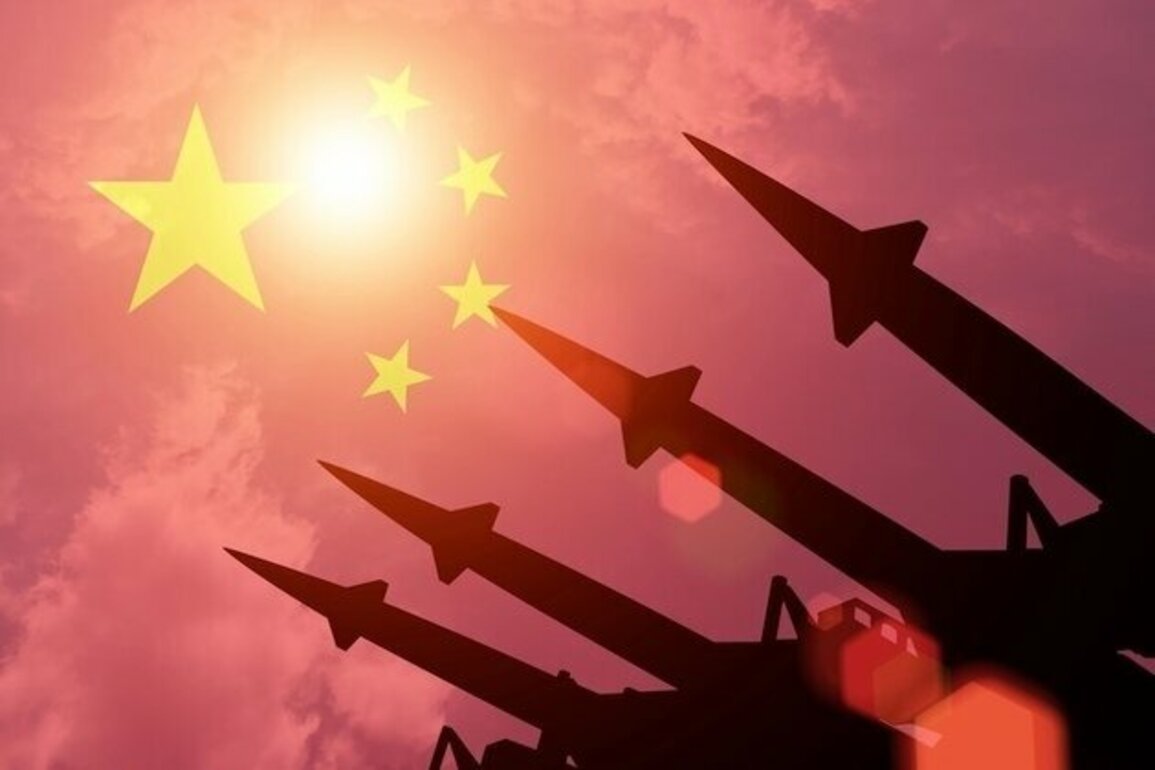
viewsPaopano/DepositphotosChinas 2025 Victory Day military parade drewglobal attentionas China flexed its growing military might and its claim to the status of a full-fledged great power. Some of the weapons on display were the new DF-5C intercontinental ballistic missiles and the countrys so-calledstrategic acea land, sea, and air nuclear triad that strengthens its overall deterrence posture. Indeed, it is easy to view the spectacle asdeterrence theater,a message to rivals that China has the tools to punish and survive escalation. Likewise, the presence of key authoritarian leaders, coupled with the absence of U.S. officials and their allies, further underscored an emergingnon-Western coalition. Yet this only tells half the story. From President Xi Jinpings rallying speech to the release of 80,000 balloons and 80,000 doves, the parade was also performative, a spectacle designed to reinforce Chinas enduring commitment to peace even as it flaunts itsgrowing strength.
At the opening of the ceremony, President Xi Jinpingdeclaredthat China will always be a force for peace, while soldiers on parade along the Changan (eternal peace) avenue proudly chanted in unison: justice will prevail, peace will prevail, and the people will prevail. The prominence of peace at the parade underscores how deeply the concept has been woven into Chinas worldview and foreign policy logic. Nowhere is this clearer than under Xi Jinpings regime where China hasrepeatedly assertedthat peace is part of the Chinese DNA. At a similarmilitary parade held in 2019, he proclaimed that the Chinese nation does not carry aggressive or hegemonic traits in its genes, linking the idea of harmony to Chinas 5,000-year-old civilization.
This indigenization of peace in Chinese culture and history reflects a broader effort to align theConfucian idealsof inclusivity amidst diversity with the modern practice of Chinese foreign policy. Crucially, suchhistory-infused narrativeshave frequently surfaced in Beijings rationalization of its role in global governance and ultimately, its self-image asa natural force for peace. This framing ofpeace as innate to Chinese civilizationessentially closes the loop: for Beijing, its pursuit of peace is not a choice but a destiny.
Chinas pacifist posture is also grounded in constant references to victimhood. Beijing often invokes its history of suffering to argue that a nation once subjected to repeated aggression naturally cherishes the order and harmony it now enjoys.State media coverageof the parade, for example, stressed the heavy price paid by the Chinese people for victory in World War II, framing peace as both hard-won and costly. Thesevictimhood discourseshave long been a staple of Chinese foreign policy because they provide moral justification for otherwise coercive behavior. For instance, rather than acknowledging its punitive capacity outright, Beijing often couches itsinformal measuressuch as tacit sanctions against offending states, as justified or natural consequences.
Similarly, narratives ofChinas wartime victoryemphasize its suffering of 35 million military and civilian casualties, about a third of all losses in World War II, and its role as the first nation to resist fascist aggression. These reminders supposedly lend credence to Beijings self-portrayal as a power that is innately harmonious. In Chinas narrative, it is precisely through persistent victimhood that its claim to peace gains moral force. On the more practical side, China also frames peace as the foundation that guarantees prosperity and, in turn, order for its vast state. During the parade, Xi Jinping reaffirmed this commitment topeaceful developmentdespite growing uncertainties and the persistence ofChina threatperspectives.
Peaceful development and peaceful coexistence have long been fixtures of Chinese foreign policy discourses, with continuities running from Mao to Xi. At its core, they echo the liberal thesis that economic interdependence fosters shared prosperity, and with it, the conditions for lasting peace. This view is apparent for instance in Xi Jinpingstrip to Southeast Asiaearlier this year, where he repeatedly stressed that regional stability is inseparable from economic progress, casting Chinas influence as integral to the regions continued development. China thus continues to embrace the liberal promise of peace through prosperity to assure its partners, even if it sometimes parades its missiles and drones to make the point stick.
Like other great powers in history, China is obsessed with selling the idea of harmony and shared prosperity. What makes its vision distinct, however, is the narrative of suffering that underpins it, and ironically, the non-military (i.e. economic) appeal it projects to the world. Taken together, Chinas invocation of an innate genetic code of peace, its appeals to historical victimhood, and its embrace of peaceful development underpin a narrative of peace that it strategically deploys to cast itself as a distinct, non-Western yet ultimately benign major power.
The missiles rolling down Changan Avenue and the optics of Xi flanked by Vladimir Putin and Kim Jong Un sent an unmistakably antagonistic message especially to Western audiences. Yet focusing only on this surface-level image risks overlooking the other half of the storyChinas own articulation of what its capabilities were meant to signify. Alongside the display of military hardware, Chinese narratives on the day of the parade emphasized thedefensive natureof the countrys national defense policy. Beijing stressed that while it takes pride in its military advances, it remains committed to ano-first-use nuclear doctrineand continues to situate security within the broader context of safeguarding prosperity and development. By contrast, Washingtons recent decision to revive thehistoric Department of Waronly reinforces Beijings self-portrait as a force for peace, casting its rival as the one openly embracing assertiveness.
In presenting this pacifist stance, China seeks to frame its cutting-edge capabilities not as tools of coercion,but as markers of readinessas they aspire to claim a greater voice in global affairs. For China, the underlying logic is clear: military modernization is not only a prerequisite for major-power status, but also the necessary foundation for a global leadership thatspeaks for those left behindby the Western liberal order. For Beijing, flexing its strength is not a betrayal of peace but the very proof that it has the power to guarantee it. Chinese officials often argue that the world is in flux, beset by agovernance deficit, while blaming the US-led West for unraveling the postwar international order. They also highlight the inevitable rise of the Global South as further proof that global governance reforms are overdue.
To this end, China has been quick to propose supplements to the existing UN-based system. At the SCO summit held just two days before the parade, Xi unveiled the Global Governance Initiative, signaling Beijings intent to take a leading role in reshaping what it sees as a troubled order. This week, Xi doubled down on this agenda by emphasizing that countries of the Global South must be better represented in global governance, urging them to expand their participation through thegrowing BRICS bloc. Meanwhile, Washingtons traditional leadership role is under greater scrutinynot least because of its habit of weaponizing trade, including to its own partners and allies, in an effort to fend off an emerging multipolar world.
Against this backdrop, Chinese narratives frequentlycontrast Americas apparent decline with Beijingsself-styled contributionsto peace and global governance.Chinese academicshave also emphasized that Chinas vision of peace is rooted in upholding the sanctity of the UN Charter, which can be framed as the living testament to the wartime victories of 80 years ago. Indeed, by tying peace to the UN Charter and the post-war international order it vows to defend and sustain,Beijing casts itself as the true heirto the victory of 1945. And the weapons on display during the parade were not just instruments of war, but symbols meant to signal thatChina is readyto safeguard peace, to shape global governance, and to claim its place as a responsible leader in an uncertain world.
But Chinas appeal to peace is best measured beyond words. The real test lies in how its partners, especially those on its periphery, perceive its actions, and whether Beijing can follow through on promises of global governance reform without overextending its capabilities. With the exception of states at the frontlines of territorial disputes, there isevidencethat many of Chinas neighbors are drifting closer to Beijing. Economic pull is one reason, but growing doubts about Washingtons staying power as an offshore balancer also work in Chinas favor. Beijings narratives double down on this point, consistently portrayingAmerican hegemony as waning, while U.S. foreign policy under Trump is cast as erratic and destabilizing.
Claims to peace and stability by major powers are always relative. Today, Xi Jinping is selling a multipolar order with China as an active player, while Washington offers little that inspires confidence. Against this backdrop, China flexes not only its military capabilities but also its vision to fix a postwar order it sees as betrayed by U.S. leadership. Whether performative or genuine, Chinas consistent appeals to peace must be judged in the context of an international order in flux. And its triumphalism on full display last week lends, if nothing else, a measure of credibility to its promise of peace and prosperity.
Further Reading on E-International Relations
- Opinion Chinas e-Renminbi as a Fiscal Silk Road?
- Opinion The Sino-Iran 25 Years Agreement: Why, and Why Now?
- Opinion Chinas Global Security Initiatives Revisionism
- Opinion Why Tsai Ing-wens Victory is a Blessing for the Taiwan Strait
- The Global South in Times of Crisis: A ChinaAfrica Relations View
- Opinion China and the Rebuilding of Syria
About The Author(s)
Enrico Gloriais an Assistant Professor of International Relations at the University of the Philippines Diliman and a Ph.D. candidate in the Department of International Relations at Tsinghua University. His research focuses on Chinas rise, its foreign policy toward ASEAN, Sino-Philippine relations, and the role of discourse and narratives in major-power diplomacy. His work has been published in The Pacific Review, Journal of Contemporary China, and Foreign Policy Analysis. He also contributes commentary to outlets including Rappler, South China Morning Post, East Asia Forum, and The Diplomat.
TagsChina